Low Relief Mural vs High Relief Mural: 5 Amazing Differences
Low relief mural vs high relief mural — if you’ve been searching for this comparison, you’re likely trying to decide which sculptural wall art technique suits your space. The short answer: it comes down to how far the design projects from the wall, and the visual drama that creates. This guide covers everything you need to know before you commission your next mural.
Table of Contents
- What Is a Low Relief Mural?
- What Is a High Relief Mural?
- Low Relief Mural vs High Relief Mural: Side-by-Side Comparison
- Which One Should You Choose?
- Frequently Asked Questions
- Conclusion
Introduction
Relief murals are one of the oldest forms of wall art, dating back to ancient temples and palaces. Today they remain popular in interior design and public architecture because they add texture and dimension that flat paintings cannot achieve.
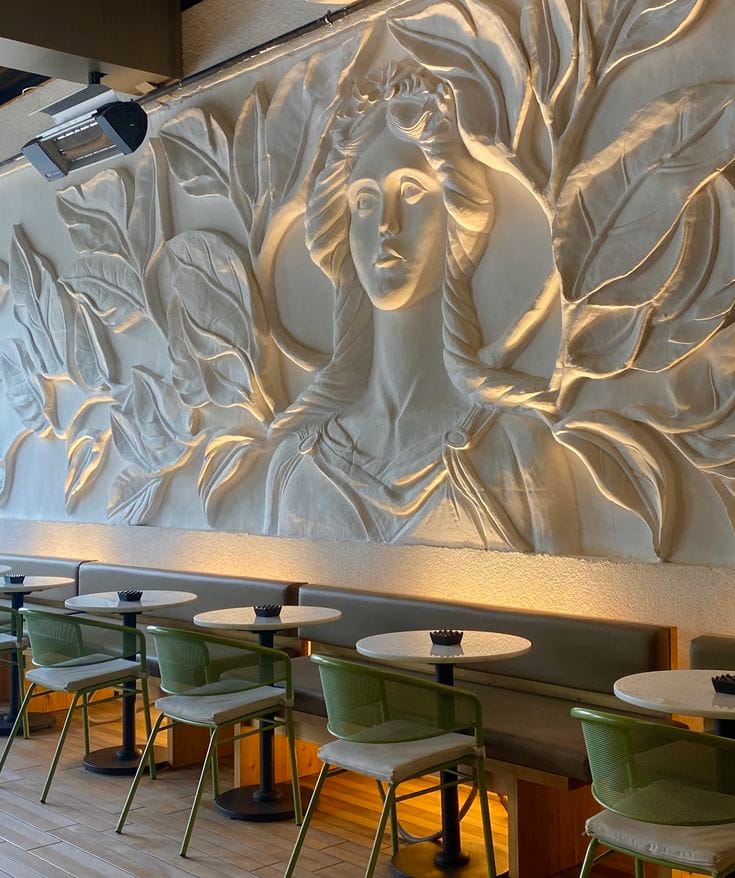
The low relief mural vs high relief mural question comes up constantly among homeowners, architects, and designers, because the two techniques look and behave very differently on a wall. Below, we break down exactly what separates them.
What Is a Low Relief Mural?
A low relief mural, also called bas-relief, is a sculptural technique where the design is raised only slightly from the background — typically a few millimeters to about half an inch.
Key Characteristics of a Low Relief Mural
- Minimal projection: figures barely rise above the surface
- Subtle shadows: shallow depth creates soft, even shading
- Lightweight: easier and cheaper to install
- Common examples: Egyptian temple carvings, coins, architectural friezes
In any low relief mural vs high relief mural comparison, low relief wins on subtlety — it’s ideal when you want texture without visual weight.
What Is a High Relief Mural?
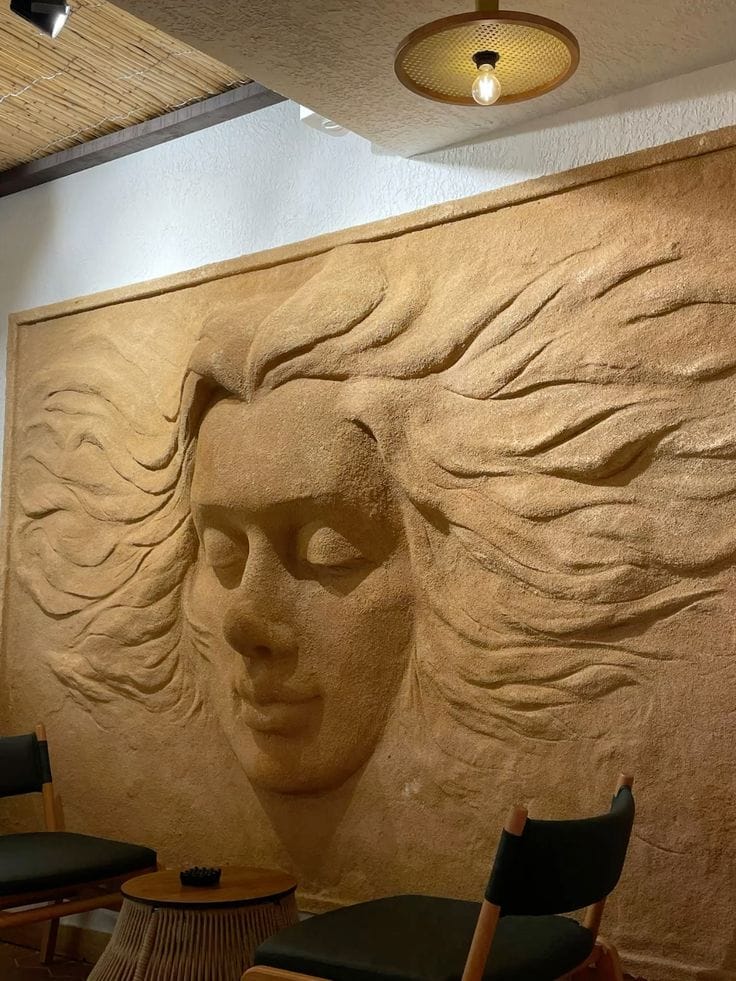
A high relief mural, also called alto-relievo, involves carving a design so it projects significantly — often more than half the figure’s natural depth, sometimes almost fully in the round.
Key Characteristics of a High Relief Mural
- Deep projection: parts may be undercut or nearly detached from the wall
- Strong shadow play: dramatic light-and-shadow shifts through the day
- More sculptural detail: realistic anatomy and drapery
- Heavier and costlier: more material and structural support required
When people weigh low relief mural vs high relief mural options for a grand entrance or monument, high relief usually wins on visual impact.
Low Relief Mural vs High Relief Mural: Side-by-Side Comparison
Here’s the full low relief mural vs high relief mural breakdown at a glance:
| Feature | Low Relief Mural | High Relief Mural |
|---|---|---|
| Projection depth | Shallow (a few mm–1.5 cm) | Deep (50%+ of natural form) |
| Visual style | Subtle, refined | Dramatic, bold |
| Weight | Lightweight | Heavier |
| Material cost | Lower | Higher |
| Installation | Easier | May need reinforcement |
| Best for | Interiors, ceilings | Facades, monuments |
| Historical example | Egyptian temple reliefs | Parthenon metopes |
Which One Should You Choose?
- Pick a low relief mural for a subtle accent wall, hotel lobby, or ceiling medallion.
- Pick a high relief mural for a bold entrance, museum wall, or public monument.
Deciding between a low relief mural vs high relief mural ultimately depends on your budget, wall structure, and how dramatic you want the final piece to look. If you’d like help choosing, check out our custom mural design services for a free consultation.
(Replace the internal link above with the actual URL of your services page before publishing.)
Frequently Asked Questions
1. Which is more expensive: low relief or high relief murals? High relief murals cost more due to extra material, labor, and structural support for the deeper projection.
2. Can low relief and high relief be combined in one mural? Yes — many artists use high relief for focal figures and low relief for background elements in the same piece.
3. Are relief murals suitable for outdoor spaces? Both work outdoors, but high relief is more common on facades and monuments because its shadows read well from a distance.
4. What materials are used for relief murals? Plaster, stone, wood, fiberglass, GRC (glass-reinforced concrete), and clay are the most common, according to Britannica’s overview of relief sculpture.
Conclusion
The low relief mural vs high relief mural debate comes down to depth and drama. Low relief gives you a refined, understated texture perfect for interiors, while high relief delivers a bold, sculptural presence suited to grand spaces. Now that you know the difference, you can confidently choose — and brief your artist on — the right technique for your project.