Architectural concrete texture for home defines many modern Indian interiors today. At Oikar Studio, we notice homeowners choosing depth, tactility, and honest materials instead of flat painted walls. As design preferences shift toward minimal yet expressive surfaces, architectural concrete texture brings a refined balance between raw character and curated luxury.
Why Architectural Concrete Texture for Home Is Trending
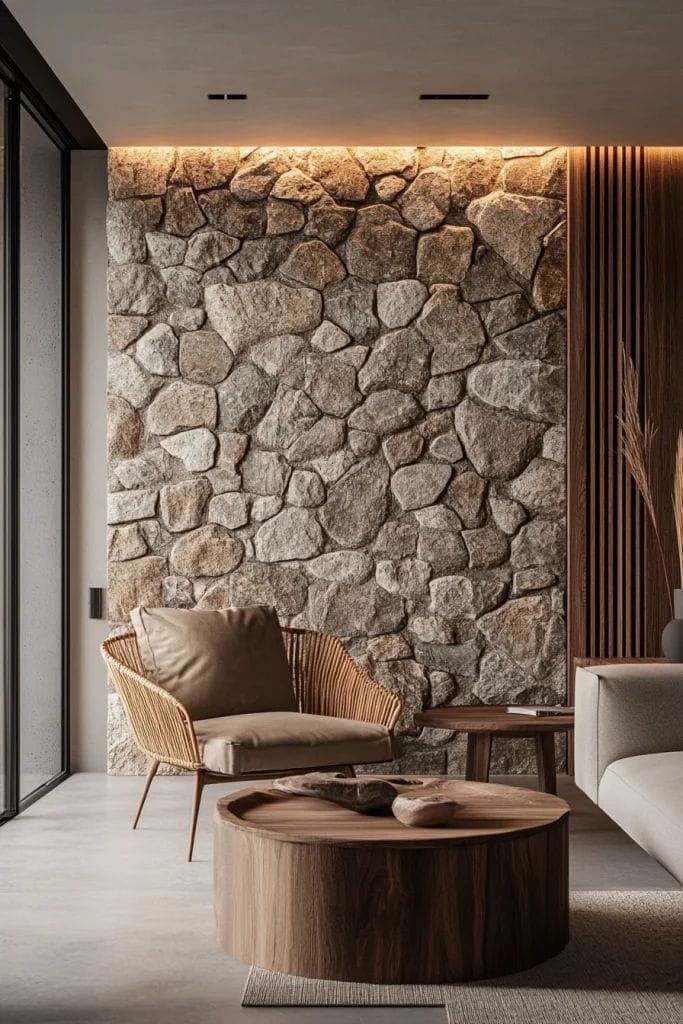
Firstly, homeowners want materials that feel authentic. Architectural concrete texture for home interiors delivers a natural, grounded appearance. Unlike glossy finishes, concrete textures create subtle shadows and tonal variations. As a result, walls appear dynamic throughout the day.
Moreover, this finish complements contemporary architecture. Clean lines, neutral palettes, and open layouts pair seamlessly with textured concrete surfaces. Therefore, designers frequently recommend it for living rooms, staircases, and feature walls.
In addition, social media amplifies this trend. Designers and homeowners widely share minimalist interiors featuring textured grey walls, and consequently, demand continues to grow across Kolkata and other metro cities.
Design Possibilities with Concrete Texture Walls
Architectural concrete texture for home spaces extends far beyond industrial themes. On the contrary, it adapts beautifully to multiple interior styles.
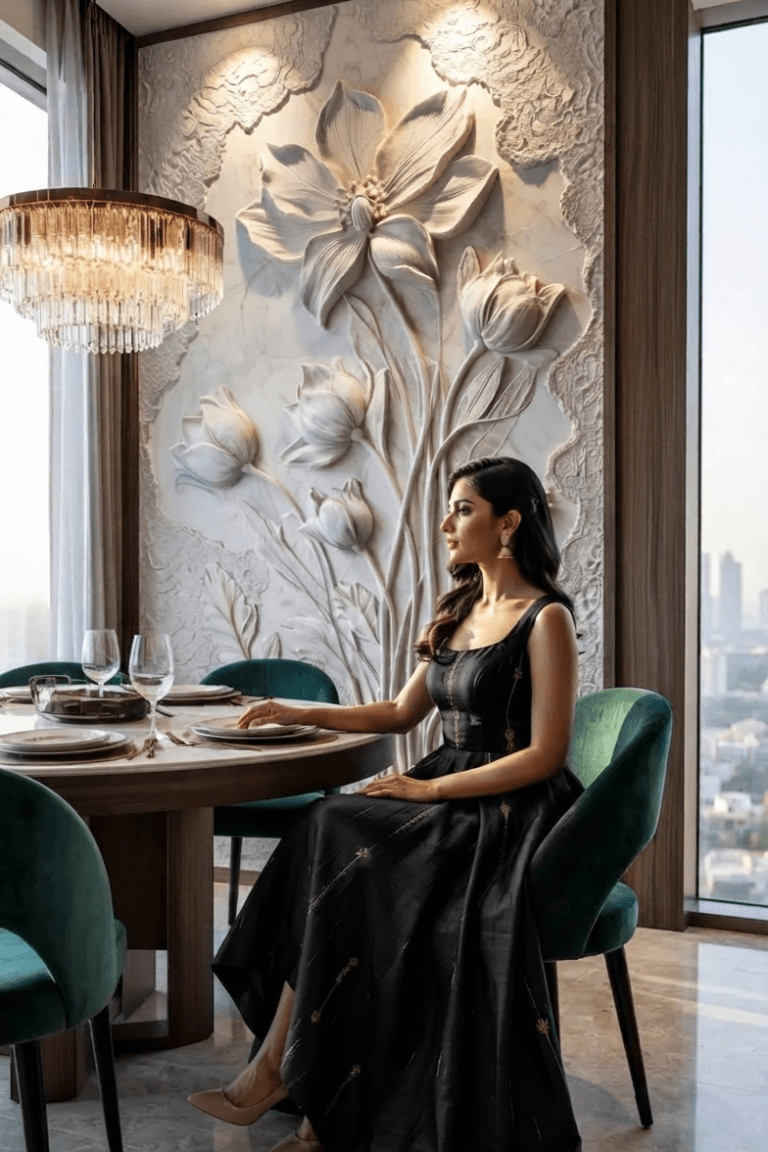
For example, in luxury residences, soft concrete textures pair well with brass lighting and wooden flooring. Similarly, modern apartments use textured walls to create a calm backdrop for statement furniture. Even compact homes benefit because textured walls add visual depth without overwhelming the room.
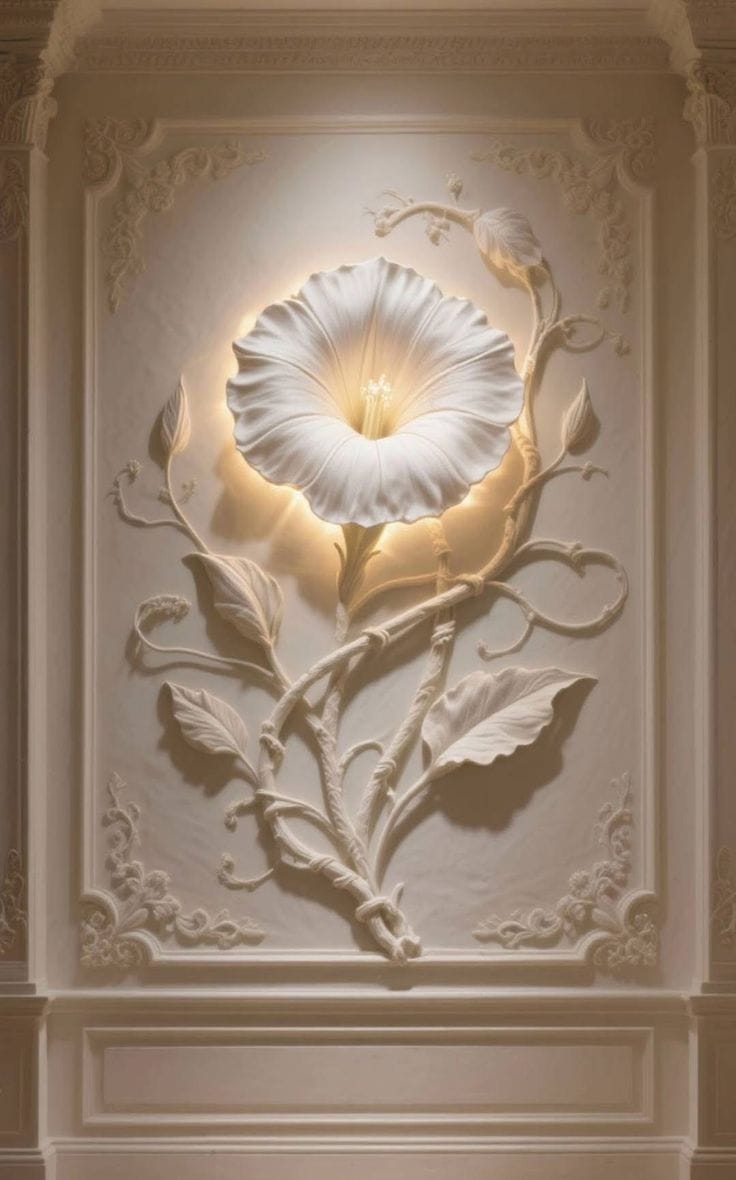
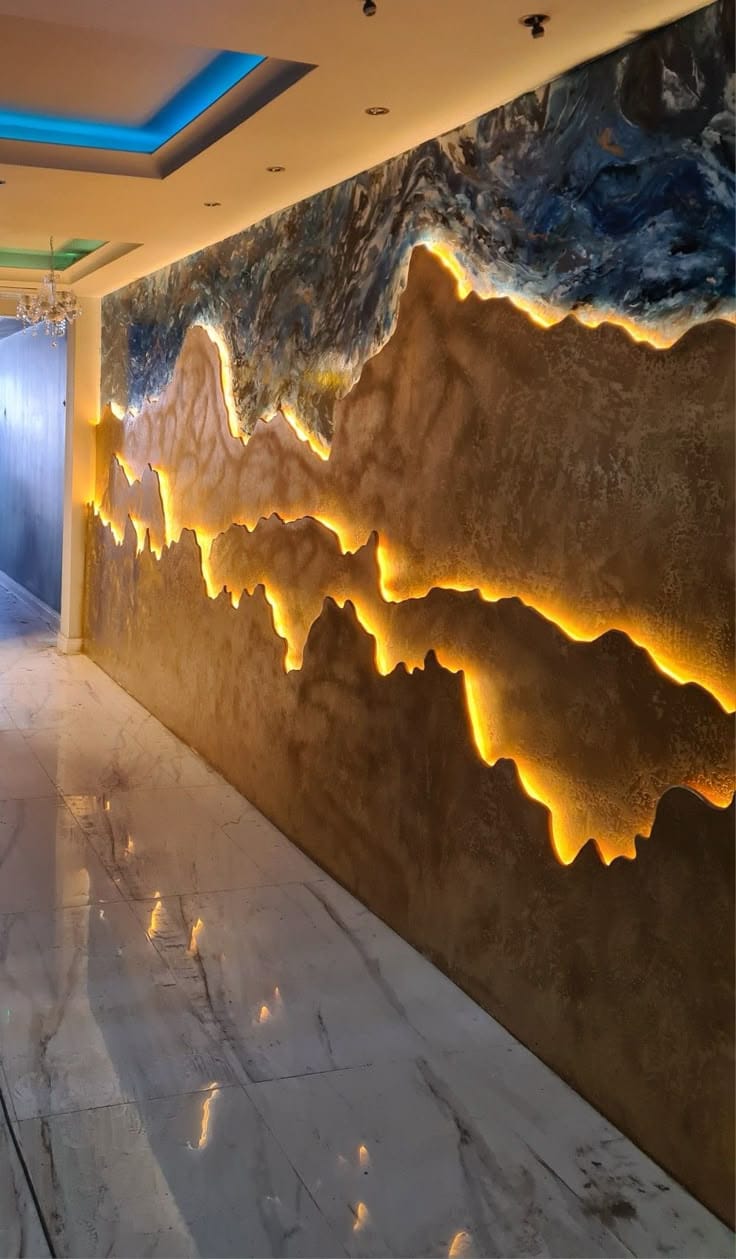
Different finishes depend on the technique applied. Smooth micro-concrete creates a subtle matte effect. Meanwhile, hand-troweled textures introduce movement and pattern. Some projects use layered plaster techniques to create deeper relief effects.
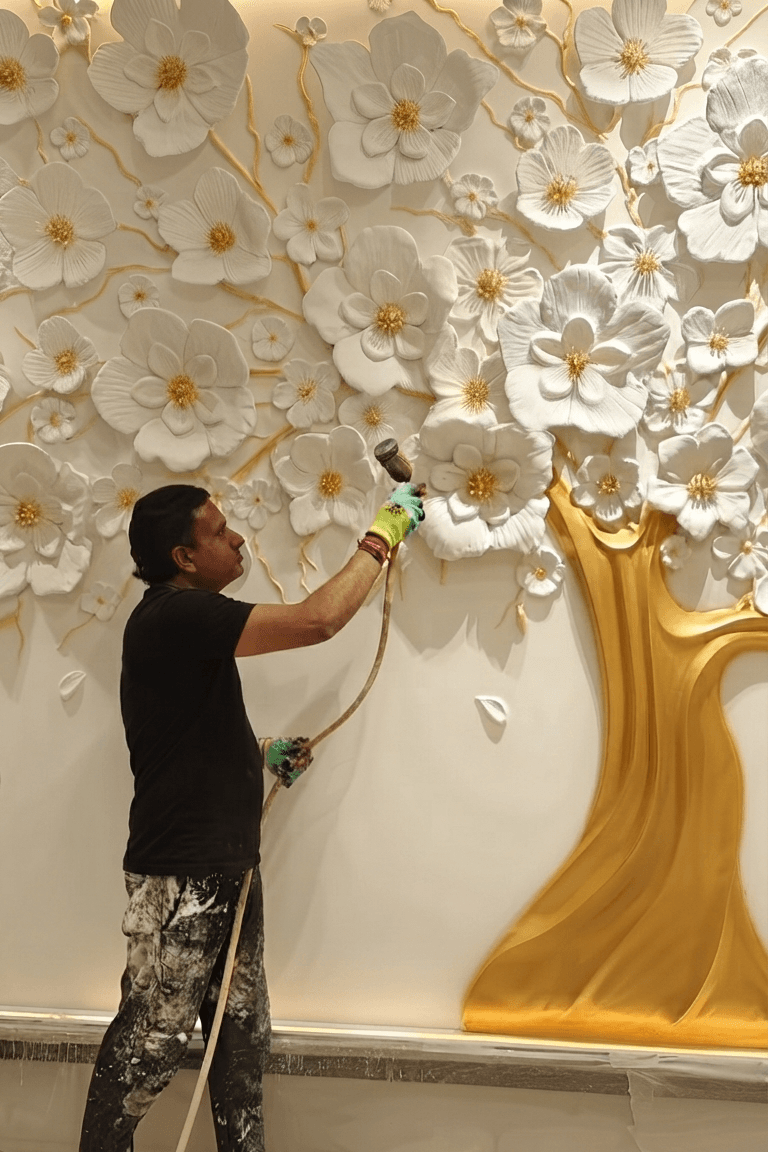
Since skilled artists craft each wall manually, every surface looks unique. This individuality adds character that machine-made finishes cannot replicate.
Benefits of Architectural Concrete Texture for Home Interiors
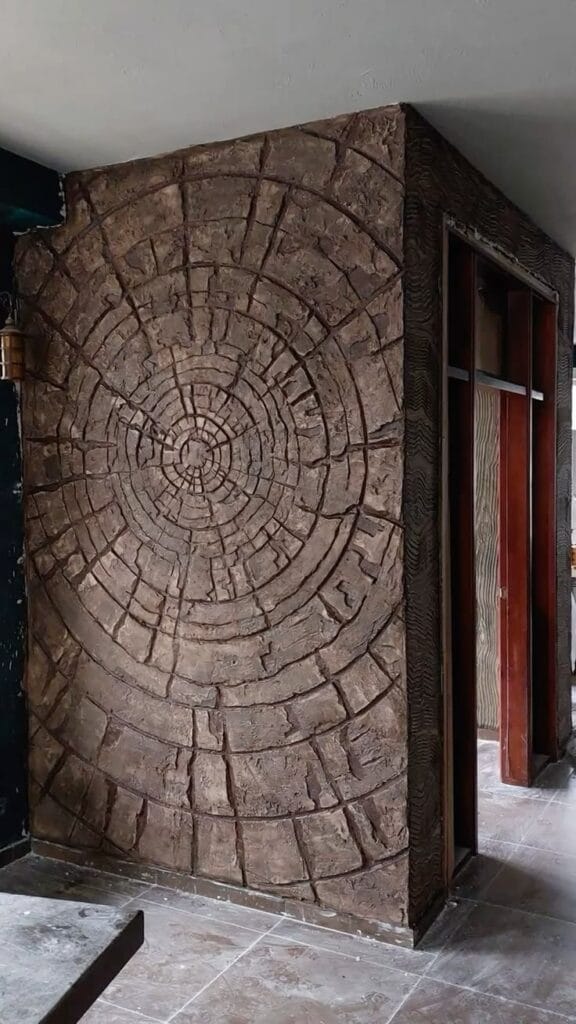
Durability stands out as a key advantage. Concrete-based textures resist minor scratches and everyday wear. Therefore, homeowners often select them for high-traffic areas such as staircases and hallways.
Additionally, maintenance remains simple. After proper sealing, homeowners can clean the surface easily with minimal effort. As a result, it suits both residential and semi-commercial environments.
Versatility in colour tones offers another advantage. Although grey remains popular, many homeowners now request earthy taupes, warm greys, and off-white concrete finishes. Hence, the look adapts easily to lighting conditions and spatial mood.
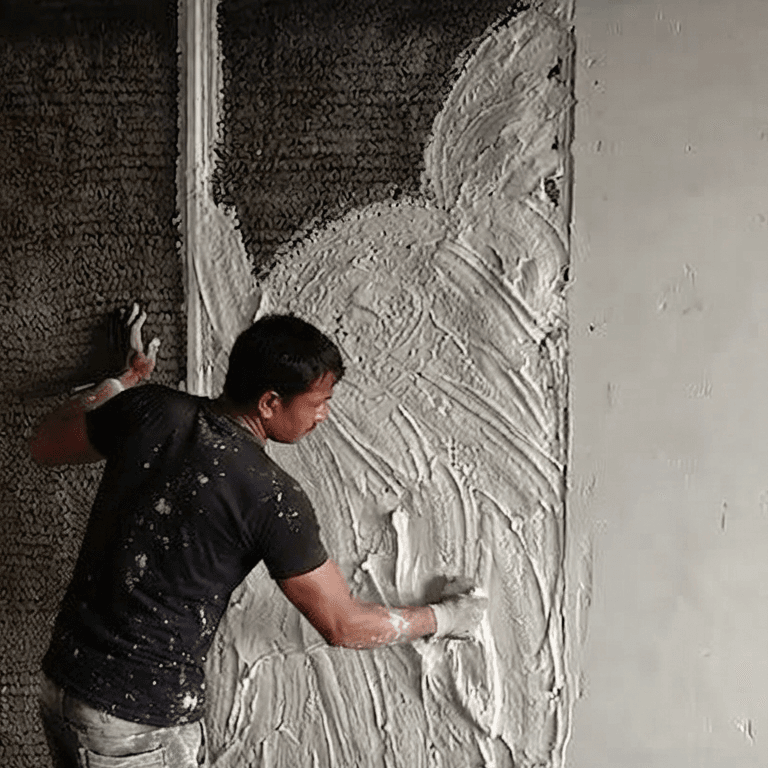
Skilled professionals apply the texture directly on prepared wall surfaces. They build the finish through controlled layering and precise hand-finishing techniques. This method ensures a seamless and durable result.
Where Architectural Concrete Texture for Home Works Best
Feature walls in living rooms remain a popular choice. However, staircase walls create an even stronger visual impact because vertical height enhances texture depth.
Bedrooms also benefit from a soft concrete backdrop behind the bed. Meanwhile, dining areas often use textured walls to anchor artwork or sculptural lighting.
For homeowners in Kolkata, humidity requires careful planning. Therefore, proper sealing and surface preparation play a critical role. At Oikar Studio, our team selects materials carefully to ensure performance aligns with aesthetics.
Why Choose Oikar Studio for Concrete Texture Walls
At Oikar Studio, skilled artists execute every architectural concrete texture for home project with precision. First, we assess wall conditions. Next, we prepare the surface thoroughly. Finally, we layer and hand-finish the texture to achieve depth and balance.
Because our team controls the entire manual process, we maintain detailing accuracy at every stage. We discuss customisation carefully before application begins. As a result, clients receive surfaces that reflect both architectural intent and personal style.
FAQs
1. Is architectural concrete texture suitable for small homes?
Yes, lighter tones and subtle finishes work beautifully in compact spaces without creating heaviness.
2. How long does the application process take?
A feature wall typically requires a few days, depending on surface size and texture complexity.
3. Is the surface waterproof?
After sealing, the surface resists moisture effectively, which makes it suitable for most interior areas.
4. Can the colour be customised?
Yes, we adjust tones from cool grey to warm earthy shades based on your preference.
5. Does it crack over time?
When professionals prepare the surface correctly and apply the material with proper technique, cracking remains minimal.
When applied correctly on a stable surface, cracking is minimal. Proper preparation plays a key role.
Latest Post
8 Tips for Outdoor Mural Relief Walls That Last (2026)
An outdoor mural relief turns a plain exterior wall into a striking, three-dimensional feature — but only when it’s planned […]
What Materials Are Used for Mural Relief?
Mural relief materials play an important role in determining the depth, strength, texture, and finish of three-dimensional wall art. Mural […]
How Much Do Wall Murals Cost? A Complete Guide for Every Space
Wondering about the wall mural cost before starting your project? A mural is a custom artwork painted directly onto a […]
What Wall Preparations Should Be Made Before You Come to Paint the Mural?
A beautiful mural begins long before the first brushstroke. In fact, wall preparation before mural painting plays a major role […]
Where to Buy Residential Wall Murals: A Practical Guide for Homeowners
Choosing residential wall murals is no longer limited to visiting a local décor shop. Today, homeowners can explore painted murals, […]
How Do Lighting Effects Impact Relief Murals?
Relief mural lighting plays an important role in showing the depth, texture, and details of three-dimensional wall art. However, their […]